

Our Spain trip was already set. Barcelona for a few days, then Girona - my son Brendan’s addition to the itinerary, a find we were all excited about. Good call, as it turned out. But as I was looking at the map one evening, I noticed something: Girona sits only about an hour from the French border.
Brendan had studied French for seven years. He’d never actually been to France. And I hadn't been there since backpacking around Europe after college.
I’d already ruled out winery visits in Barcelona - too logistically complicated alongside our sightseeing priorities. But a quick look at what lay just across the border changed my thinking entirely.
I zeroed in on the Côte Vermeille - the dramatic stretch of the Roussillon coast where the Albères foothills meet the Mediterranean - and Banyuls-sur-Mer stood out: a small coastal town where the Albères - the foothills where the Pyrenees finally meet the Mediterranean - tumble into the sea, with wineries, a hotel with harbor views, and wines most people have never heard of. A fellow wine writer confirmed it was worth the detour. Two nights, a short train ride from Girona, and we had a plan: Brendan's first visit to France, plus my chance to visit wineries.
Getting there was its own small adventure. We left Girona early to catch our train, leaving a small cooler bag with allergy-safe food behind in the rush to get to the station. The day before, I’d learned that a local rail strike had disrupted service from Perpignan onward to Banyuls - so with some help from ChatGPT, I researched options and decided to splurge on a cab rather than puzzle through local bus connections.
The ride turned out to be genuinely scenic - snow-capped Pyrenees giving way to glimpses of the Mediterranean coast - though the meter climbed well past ChatGPT’s estimate of €100 before we were even halfway there. A useful reminder: AI trip planning tools are great for logistics and options, but take the price estimates with a grain of salt. We arrived at Banyuls-sur-Mer slightly frazzled and a bit lighter in the wallet. Very much worth it, as things turned out.
Jump to:
Banyuls and Collioure AOC: A Quick Wine Primer
Before diving into the trip, a quick word on why Banyuls-sur-Mer matters to wine lovers - because most Americans, even serious wine drinkers, have never encountered these bottles.
The region sits at the southern end of Roussillon, where the Albères massif - the easternmost foothills of the Pyrenees - descend steeply to meet the sea. The vineyards cling to dramatically steep schist terraces - the dark, shale-like soil that gives the wines their distinctive mineral character. It’s hard country to farm. The terraces have to be worked largely by hand.
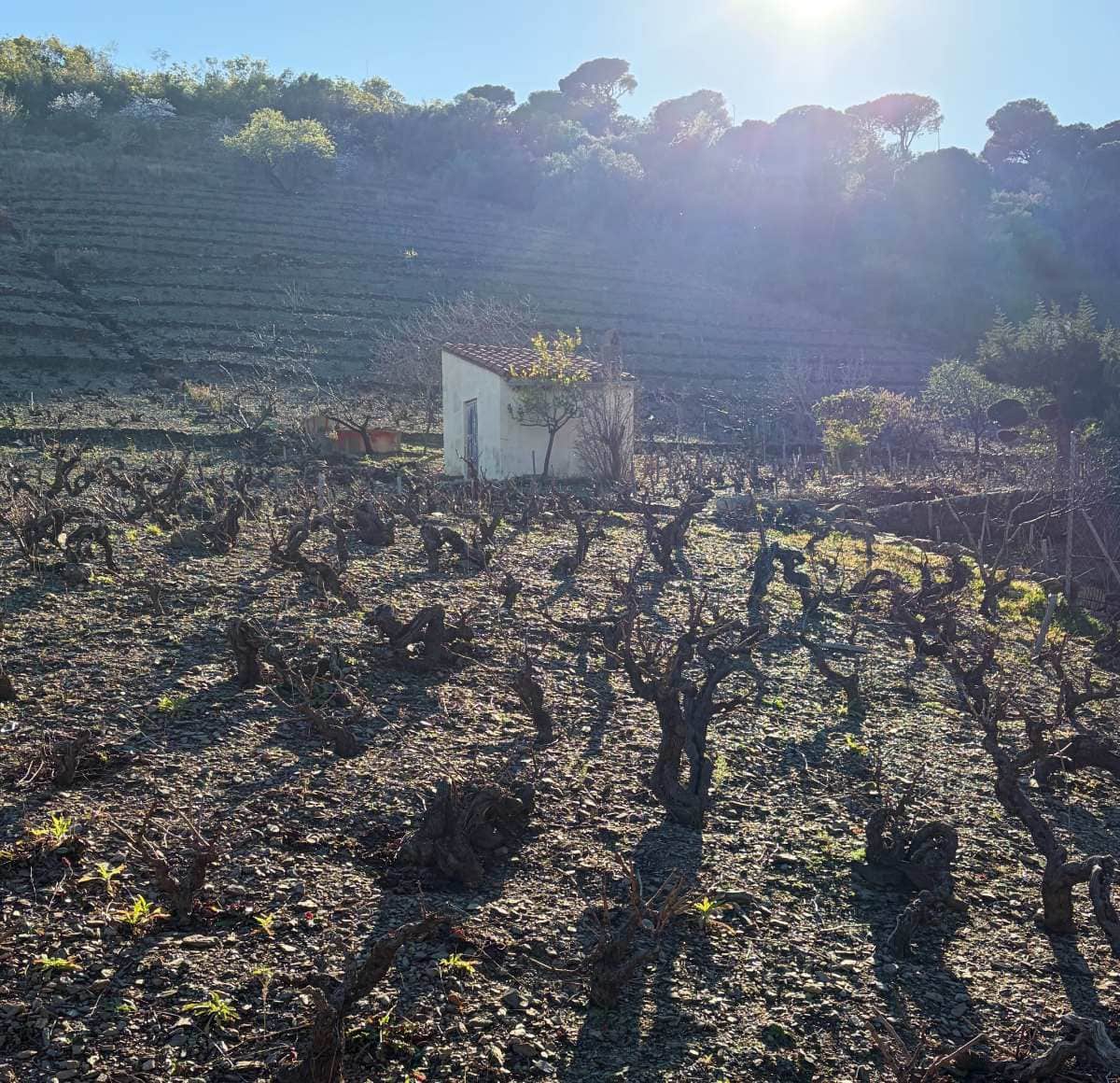
Two appellations share this dramatic landscape. The first, Banyuls AOC, produces the wine the region is historically famous for: a fortified wine made primarily from Grenache, its fermentation stopped by the addition of neutral grape spirit, leaving residual sweetness and considerable complexity. Banyuls was one of the first appellations recognized under France’s AOC system in 1936 - a founding member of the very framework that defines French wine today.
The second appellation, Collioure AOC, produces still table wines - reds, whites, and rosés - also centered on Grenache, often blended with Mourvèdre, Syrah, and a handful of traditional white varieties. The Collioure red was recognized in 1971, rosé in 1991, and white not until 2003, making these still wines a relatively recent development in an ancient region.
The fortified Banyuls gets most of the attention. But the Collioure still wines - particularly the whites and the more structured reds - are what I enjoyed most on this trip. They’re the hidden gem, and the reason I’d encourage any wine-curious traveler to make the detour.
Curious to try Banyuls or Collioure wines before - or after - a visit? You may find them, but it will take some hunting. Exports to the US are limited, particularly from the smaller producers. Your best bet is a well-stocked independent wine shop with a good French selection; call ahead and ask specifically for Collioure or Banyuls AOC. Wine-Searcher is also a handy tool for tracking down specific bottles online. But honestly? The limited availability is part of what makes visiting so rewarding. Some of the best wines I tasted - Domaine Tambour’s Collioure, for instance - simply don’t leave the region at all.
Arrival: Lunch at Le Miradou
Brendan was ready to relax in the hotel room with a sandwich after a busy morning of cross-border travel. I left him in the room and walked down to the restaurant - Le Miradou, right at Hôtel Le Catalan where we were staying - to enjoy a proper French meal.
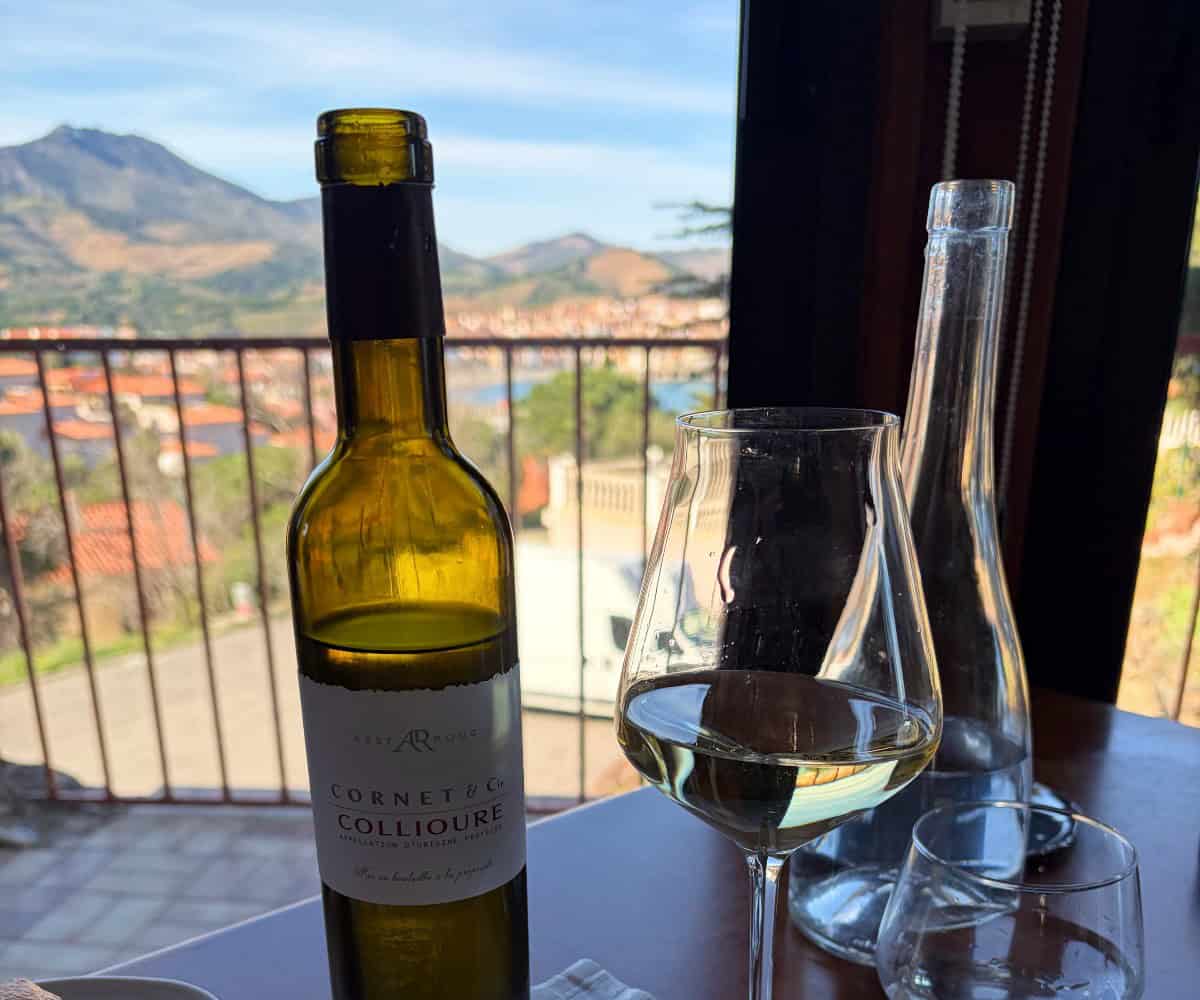
I sat down at a table with a harbor view, happy to peruse a menu in a country that takes its food and wine seriously, even at lunch.
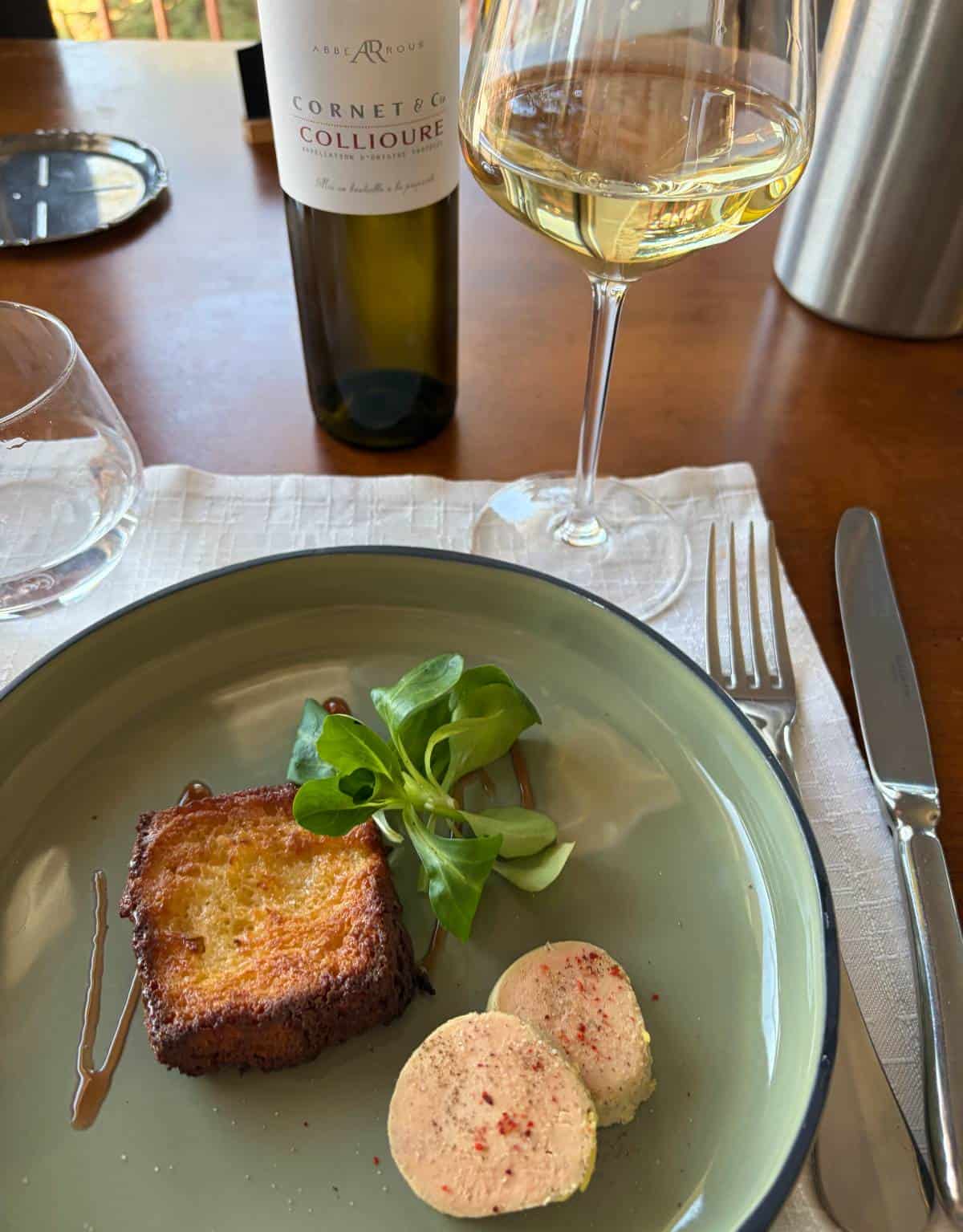
The meal began with an amuse bouche: a small breaded croquette and a delicate bite of anchovy, beet, and cream, with a wine-based cocktail alongside. Then foie gras - two lovely rounds with brioche toast and mâche, dusted with pink peppercorn. The wine was Abbé Rous “Cornet & Cie” Collioure blanc, golden and aromatic, a beautiful pairing.
For the main course I ordered the fish - monkfish, as it turned out, seared and served over white beans in broth with a herb sauce. Hearty, rustic, very satisfying after a long morning of travel. There was just one complication: the fish had a few inedible fatty bits that I left on the plate, having eaten everything else, including every last bean. The server appeared slightly alarmed that there were bits of fish remaining. I explained, in my best limited French assisted by a little discreet Google Translate, that I had very much enjoyed the meal and was simply leaving the parts I didn’t think were meant to be eaten. She smiled. I think she believed me.
C’était délicieux. And it was.
First afternoon: The Town and a Glass by the Water
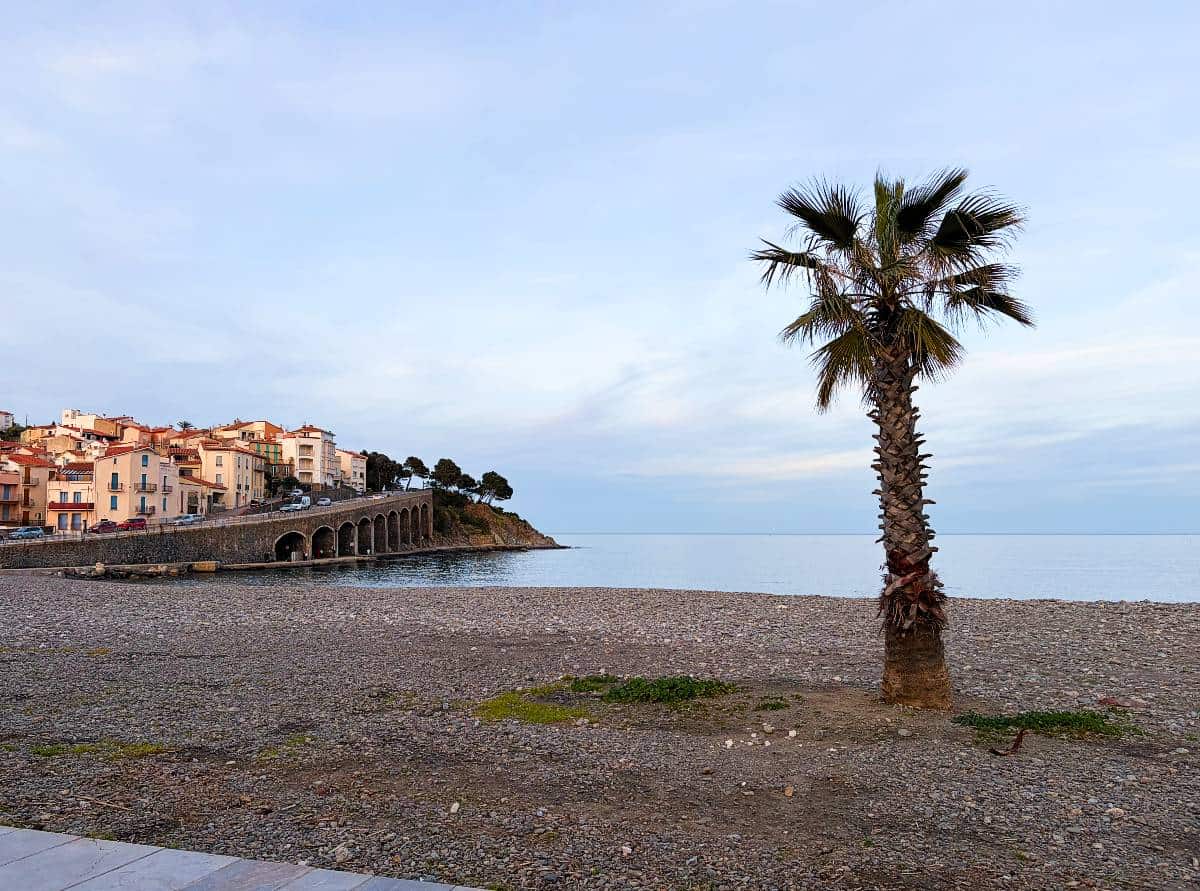
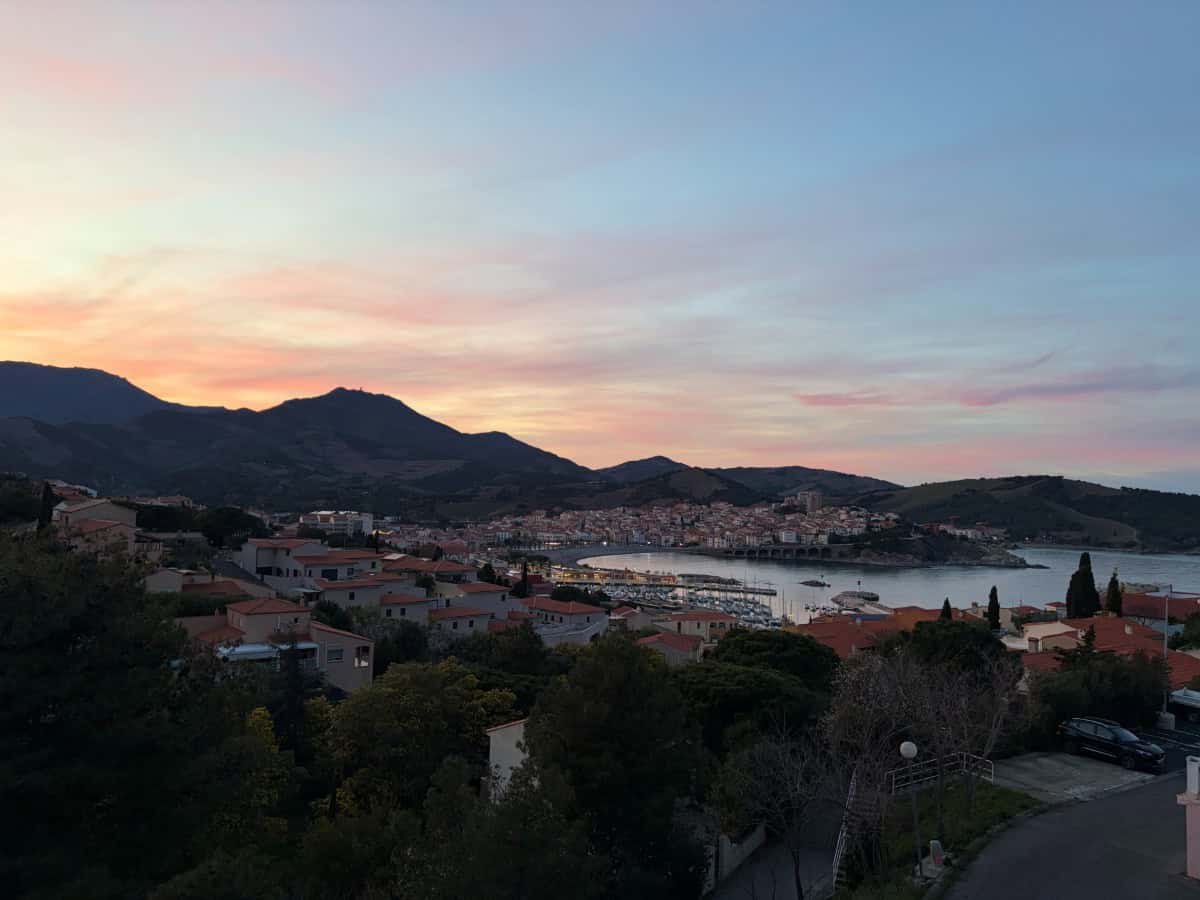
After lunch, coffee, and a chance to relax in the room, we made our way down from the hotel - perched about a mile up the hill above town - to explore on foot.
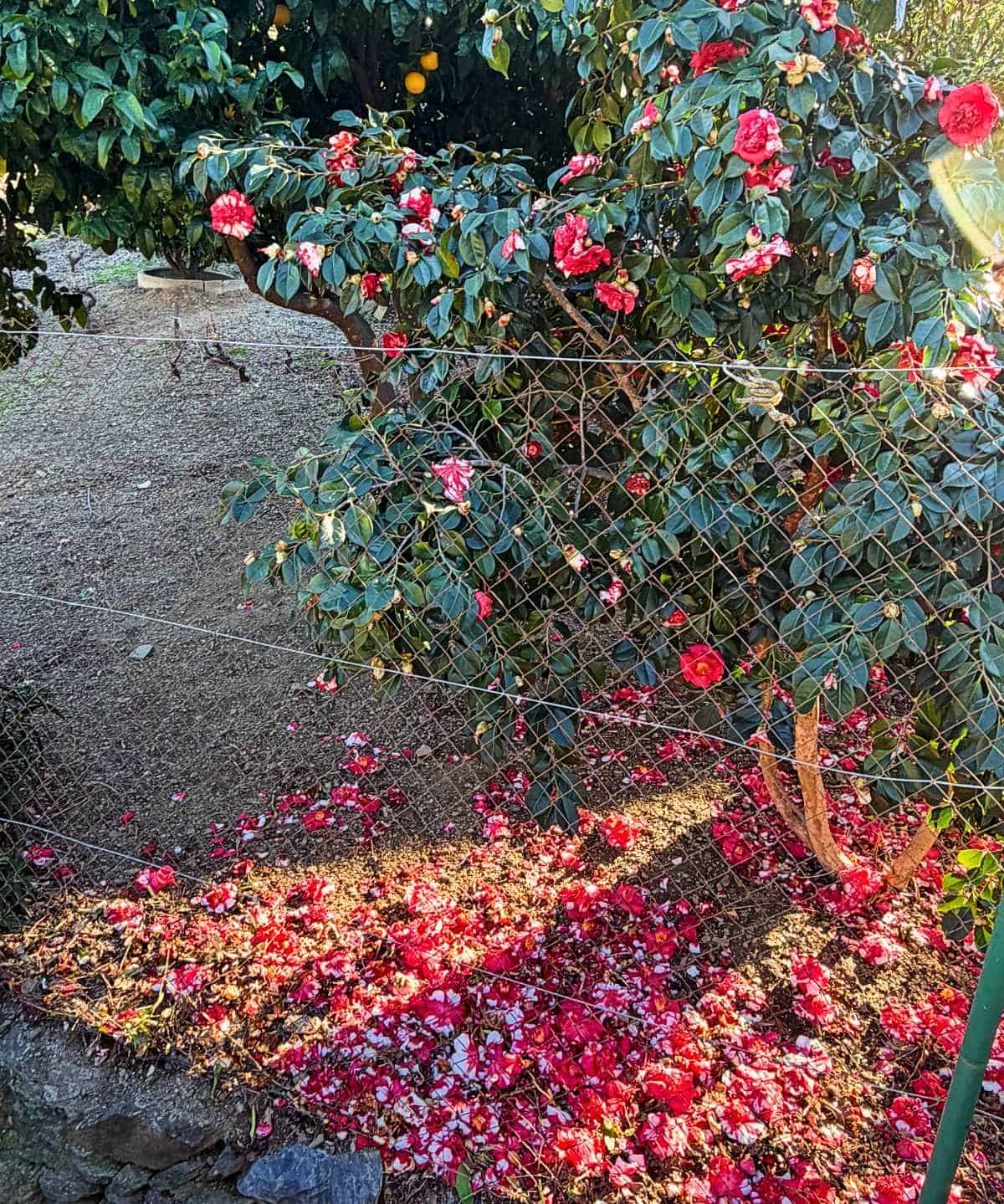
I should say something about that hill descent, and the time of year. We’d come from Boston in late February, where snow was piling up as we left. Banyuls-sur-Mer in late February is a different universe. Flowers were blooming. Cherry trees were in full blossom. Flowering bushes spilled red and white blossoms onto the path. After months of a snowy, cold winter, an early taste of spring was very welcome - something I’d discovered the year before on a spring visit to Texas wine country as well.
The town itself is small and unhurried in the off-season. Off-white facades and the distinctive terracotta roof tiles that define Mediterranean architecture line the hillsides down to the water - a pebble beach, a quiet marina, a medieval stone tower, a handful of cafés along the waterfront. Brendan in particular really appreciated the aesthetics of the town; of everywhere we visited on the trip, Banyuls-sur-Mer was his favorite, drawn in by the combination of the sea, the setting, and that warm, unhurried feel the town has in the off-season. Brendan wanted to keep exploring the town, but I was ready to duck into my first tasting room.
Clos Saint Sébastien occupies a small space right in the center of town, close to the water. I wasn’t entirely sure of the protocol walking in. Was I expected to pay for a tasting? Buy a bottle? I navigated with a combination of modest French and Google Translate and discovered that tastings were complimentary - and that there was no pressure whatsoever to purchase.
What I found in the glass was impressive. The whites were mineral-driven and precise, with the terroir coming through clearly. The reds ranged from a fruit-forward, approachable Grenache blend to a more structured bottling with some Mourvèdre in the mix, to a couple of oak-aged cuvées that showed real depth. It was a well-curated lineup that showcased an interesting range despite working primarily with one grape variety - Grenache, which I’d been enjoying a lot on the other side of the border as Garnacha.
I liked the wines a lot. I did not, however, need to carry a bottle a mile uphill to the hotel. I thanked them warmly and made a mental note to come back.
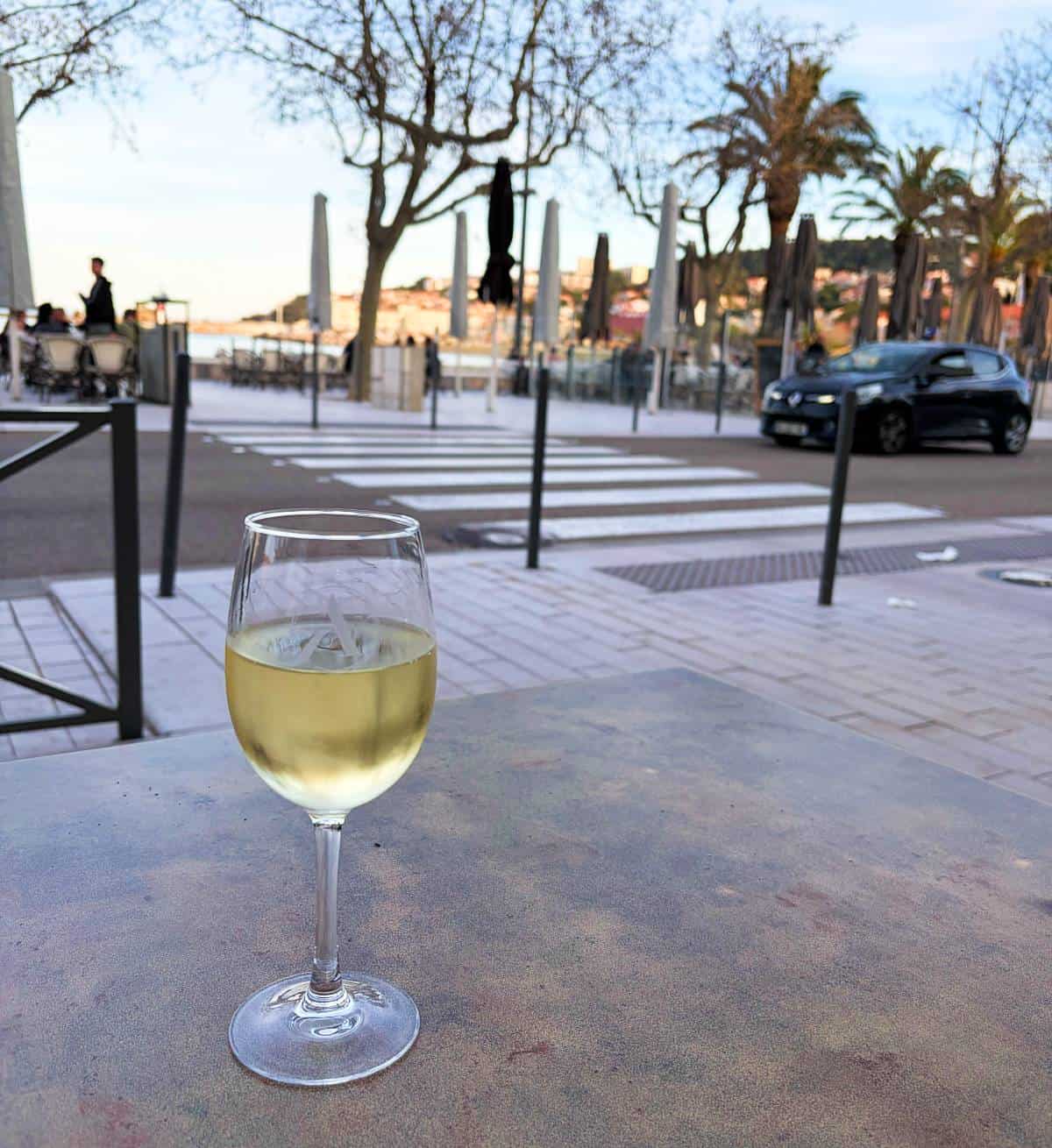
I ended the afternoon the way afternoons in a Mediterranean port town should end: at a café on the waterfront, a glass of local white in hand, palm trees rustling in the fading light, watching the boats in the harbor. Coming from Boston in February, I want you to understand what this felt like.
The Winery Hike: An Afternoon Adventure
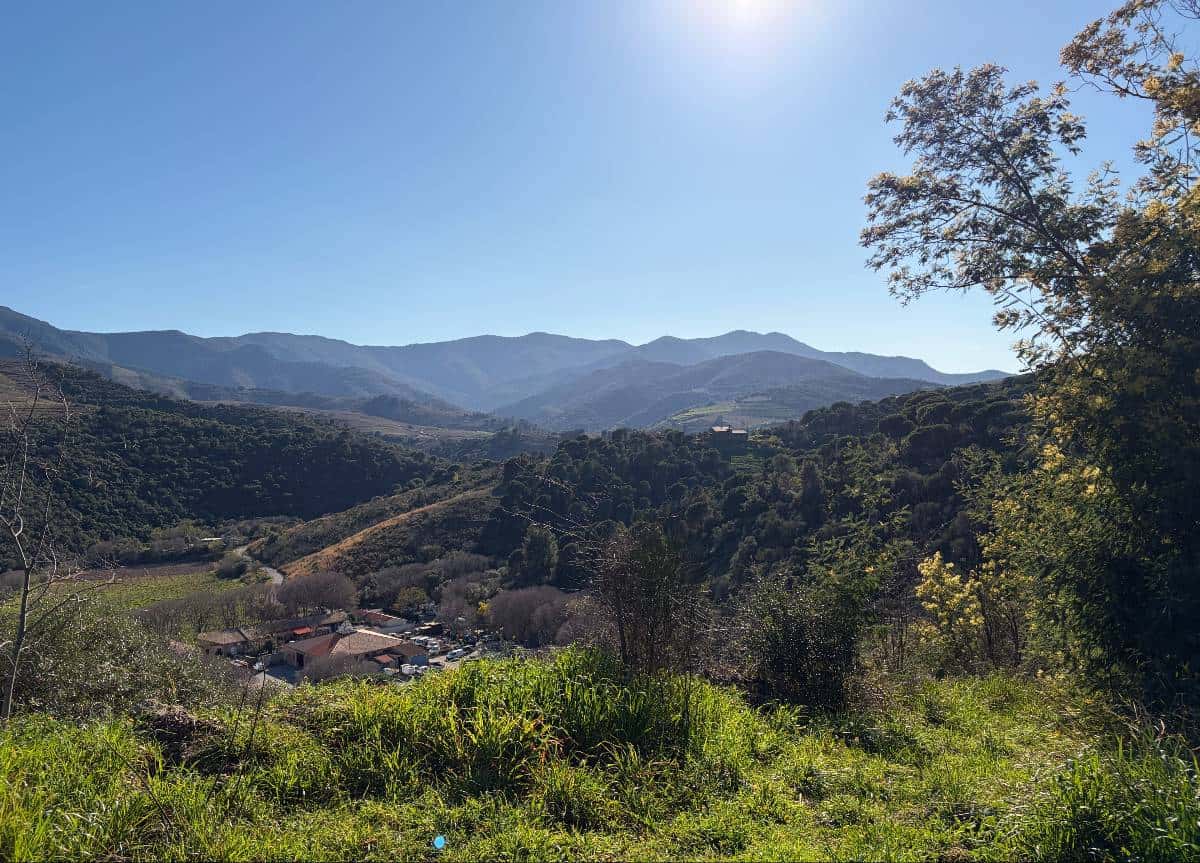
The next afternoon was set aside for serious wine exploration. I had a plan, a Google Maps route, and more optimism than I perhaps should have had.
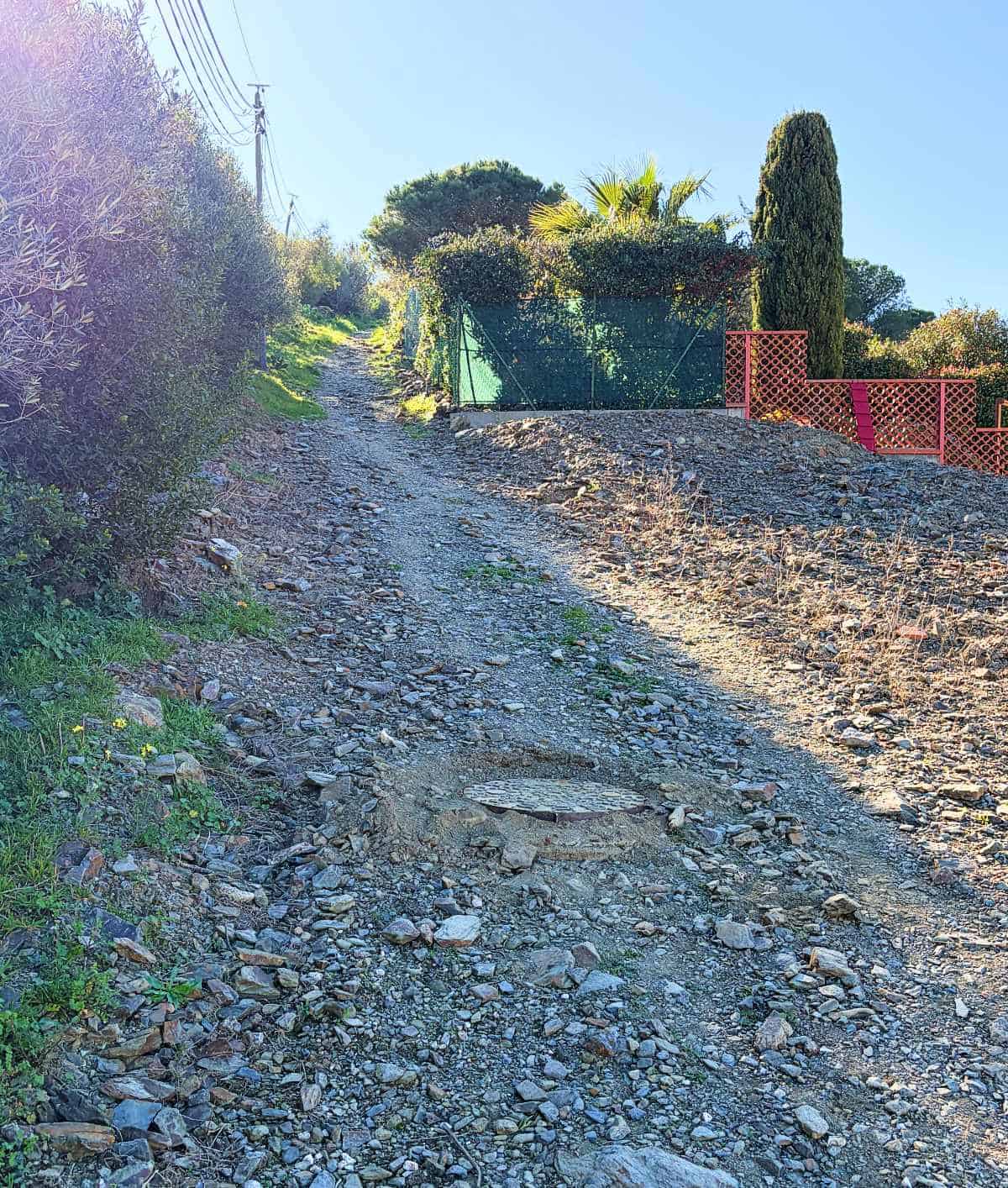
The route wound out of the hotel, and quickly had me on a footpath heading up and down hills, through the outskirts of town - residential neighborhoods rather than the main drag, the kind of streets where locals actually live - before climbing steeply into the Albères foothills. A mix of sidewalks and rough footpaths, the whole thing taking about 45 minutes on the way up.
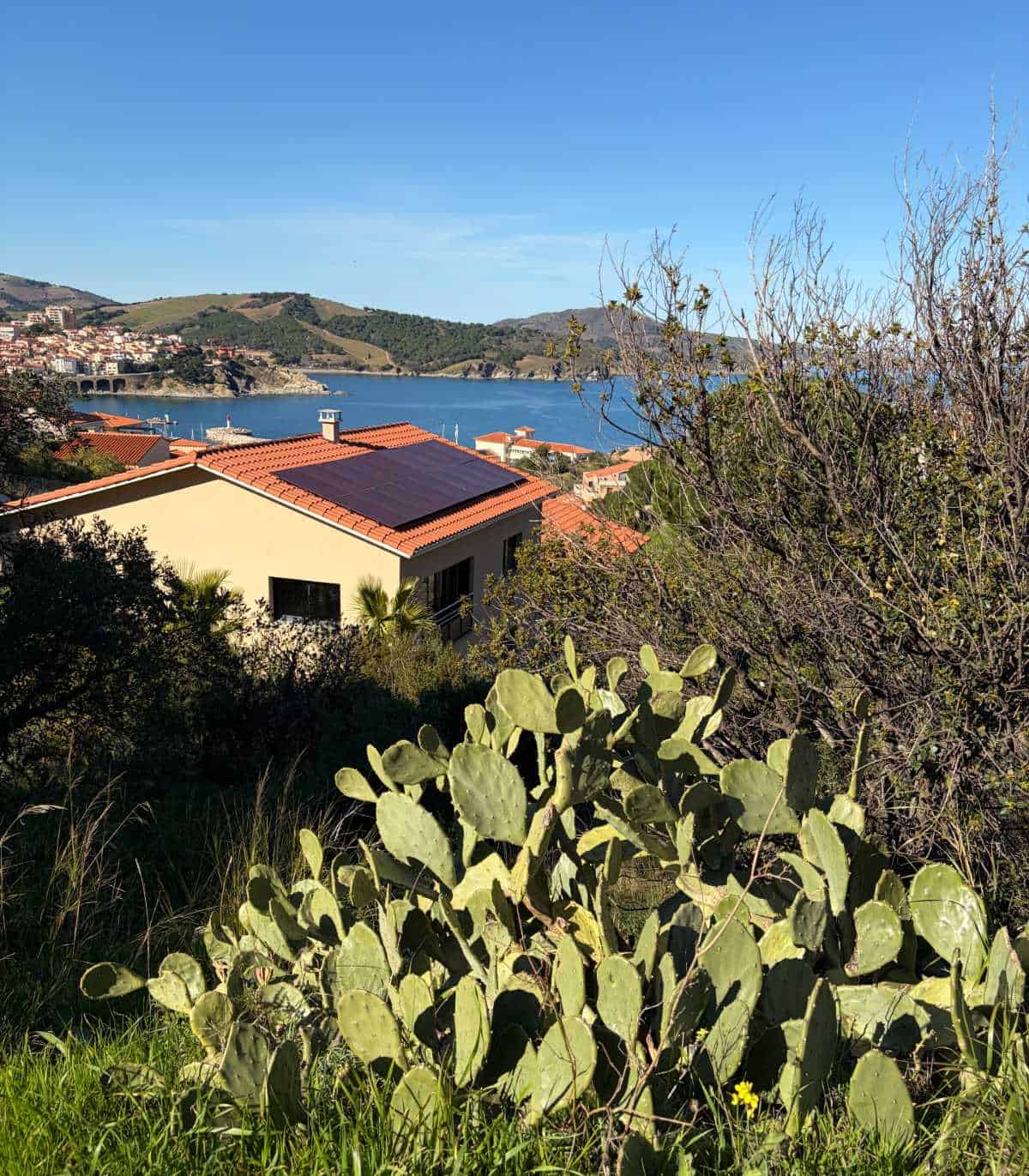
The views opened up gradually as I climbed: the town below, the terracotta rooftops, the bay and the Mediterranean beyond.
Along the way I passed 9 Caves, a wine bar recommended by my fellow wine writer Jeff from foodwineclick - who splits his time between the US and France these days, so I trust his tips on this side of the Atlantic. It was closed. I noted it for next time and kept climbing.
The path grew steeper. And stonier.
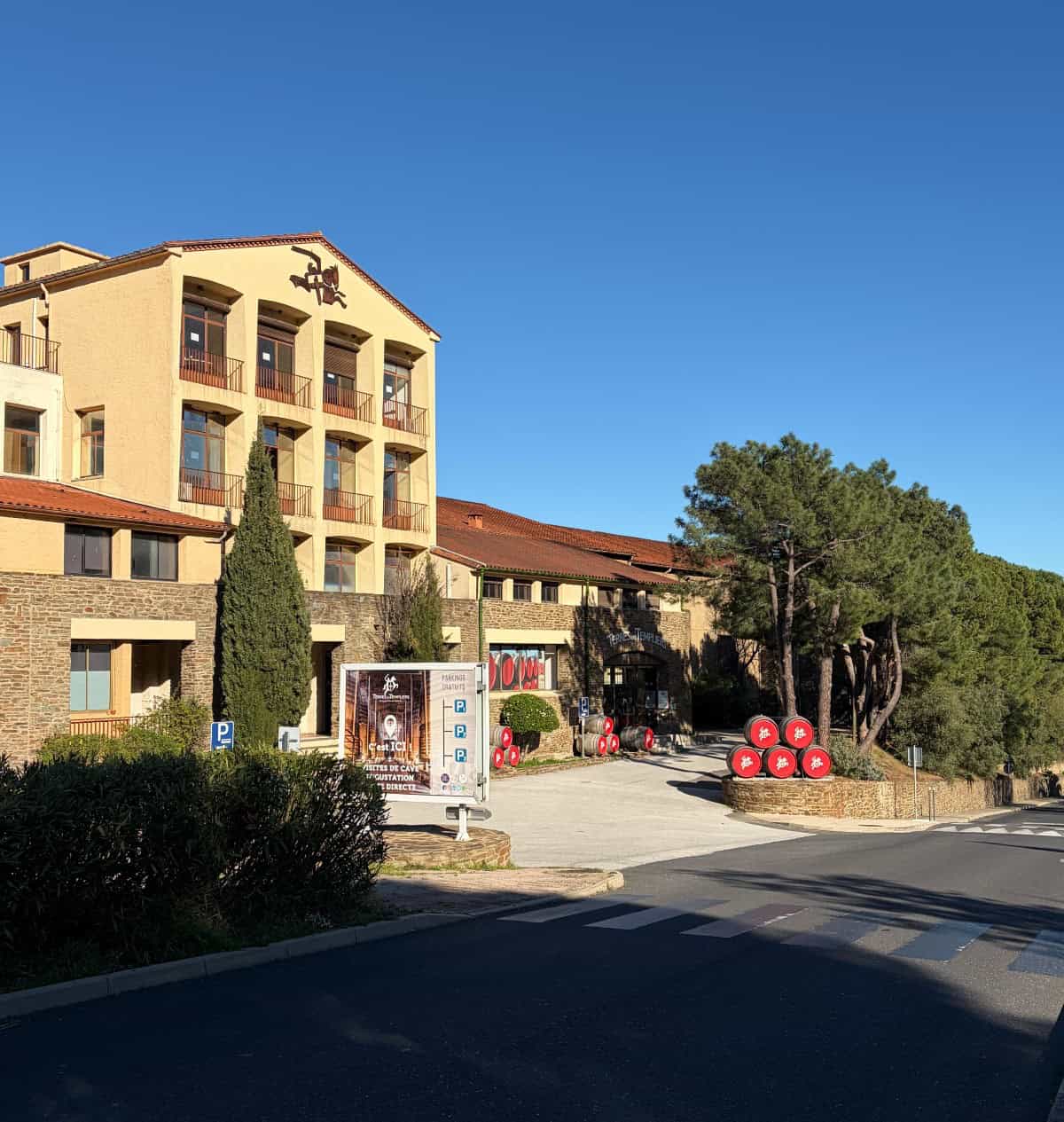
When I finally reached the hilltop cave of Terres des Templiers - the region’s major cooperative, representing some 750 growers and a significant share of both Banyuls and Collioure production - I found a large, impressive facility with wine barrels stacked outside and signage promising tours and tastings. But…
It was closed for the season.
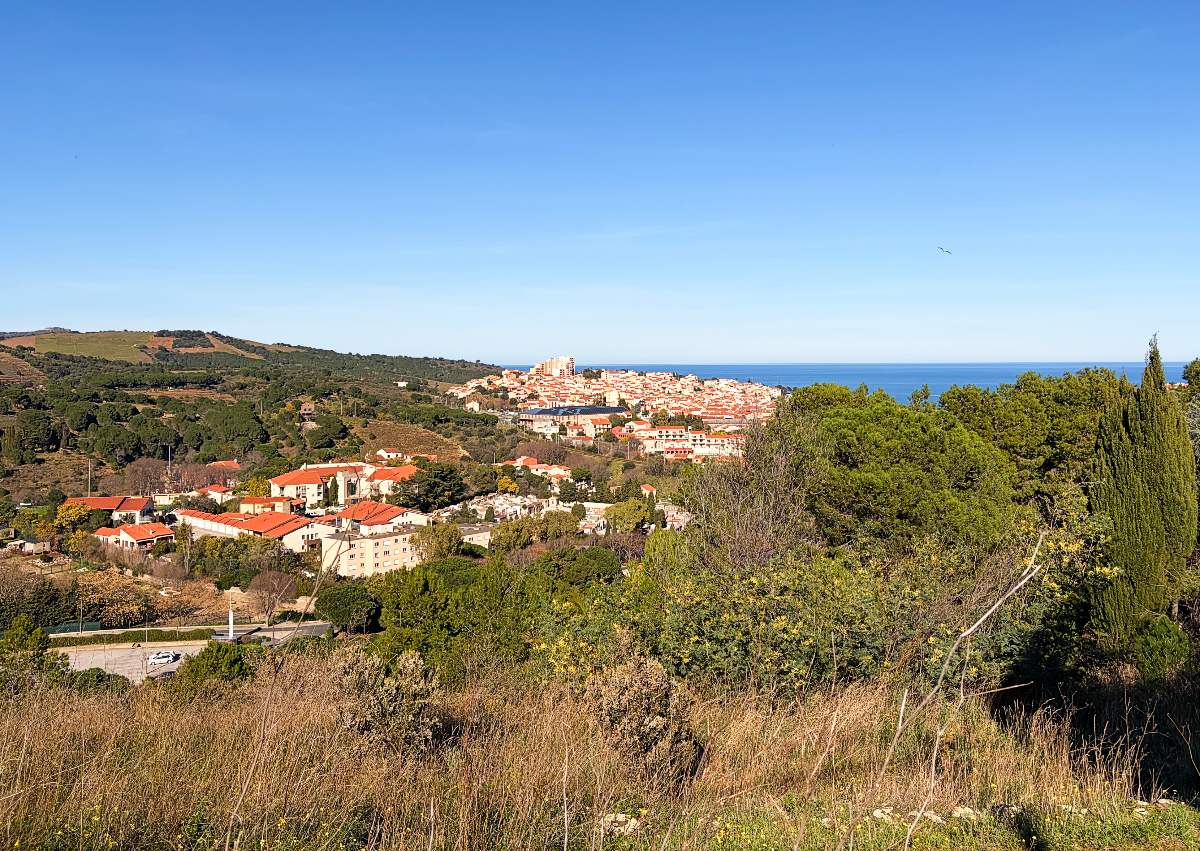
I stood there for a moment, slightly out of breath, took a long drink of water, savored the view - and it really was a remarkable view - then turned around and headed back downhill to find their year-round tasting room in town.
The Terres des Templiers tasting room is easy to find, once you know the hilltop cave is closed in the off-season, and professionally run.
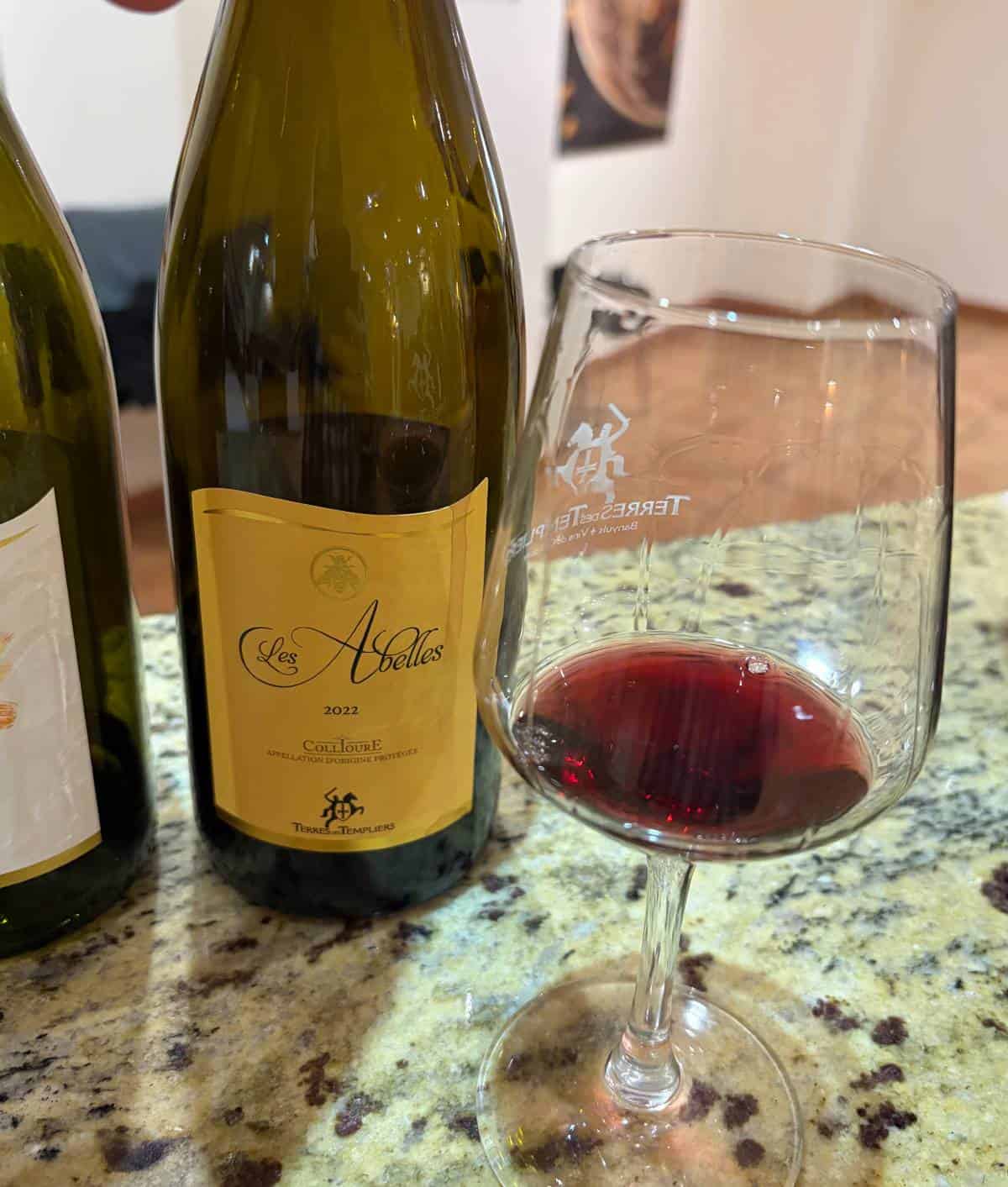
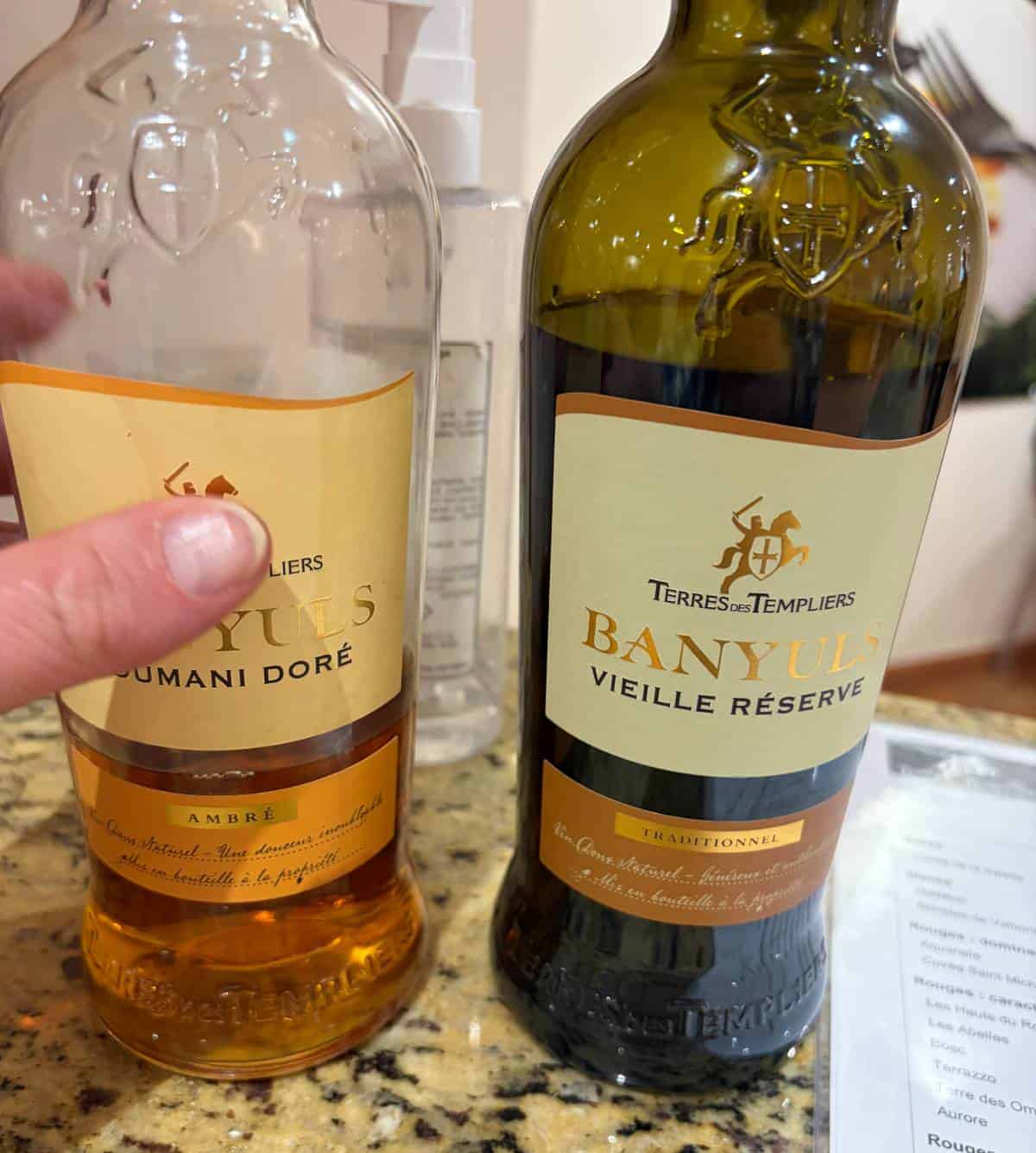
I worked through their lineup: a pleasant, classic southern French rosé; a white I found a bit flat; a light, fruity Grenache red that was easy drinking and balanced; and two Banyuls fortified wines - the traditional Vieille Réserve, which I appreciated for its restrained sweetness and complexity, and a second, sweeter style that wasn’t quite for me. If you prefer your dessert wines on the drier end of the spectrum, go for the Traditionnel.
The tasting room has a more commercial feel than the smaller producers - understandable given its scale - but it’s a worthwhile stop for understanding the breadth of what the region makes.
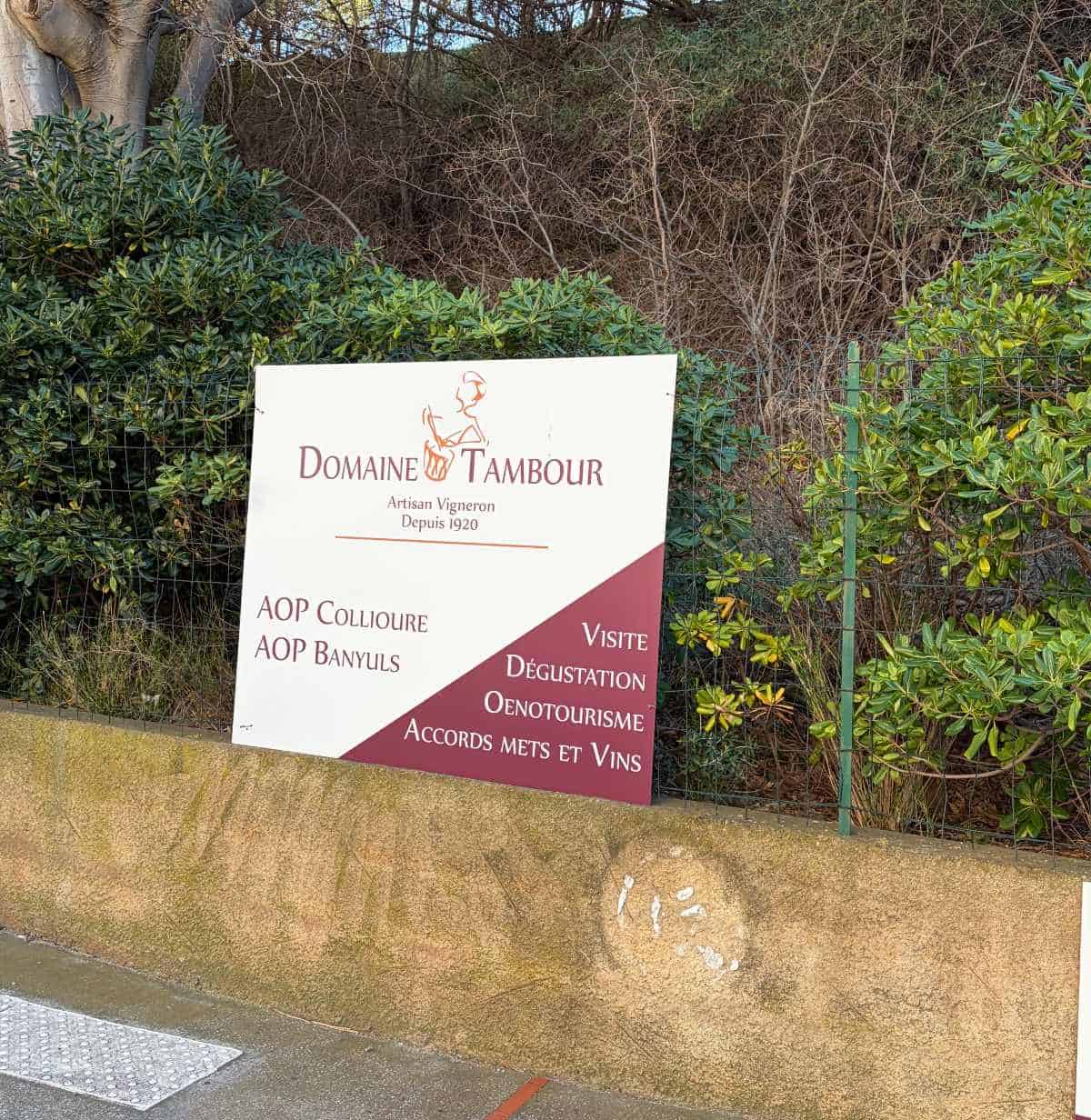
On the walk back down I stopped at Domaine Tambour, a small producer operating since 1920.
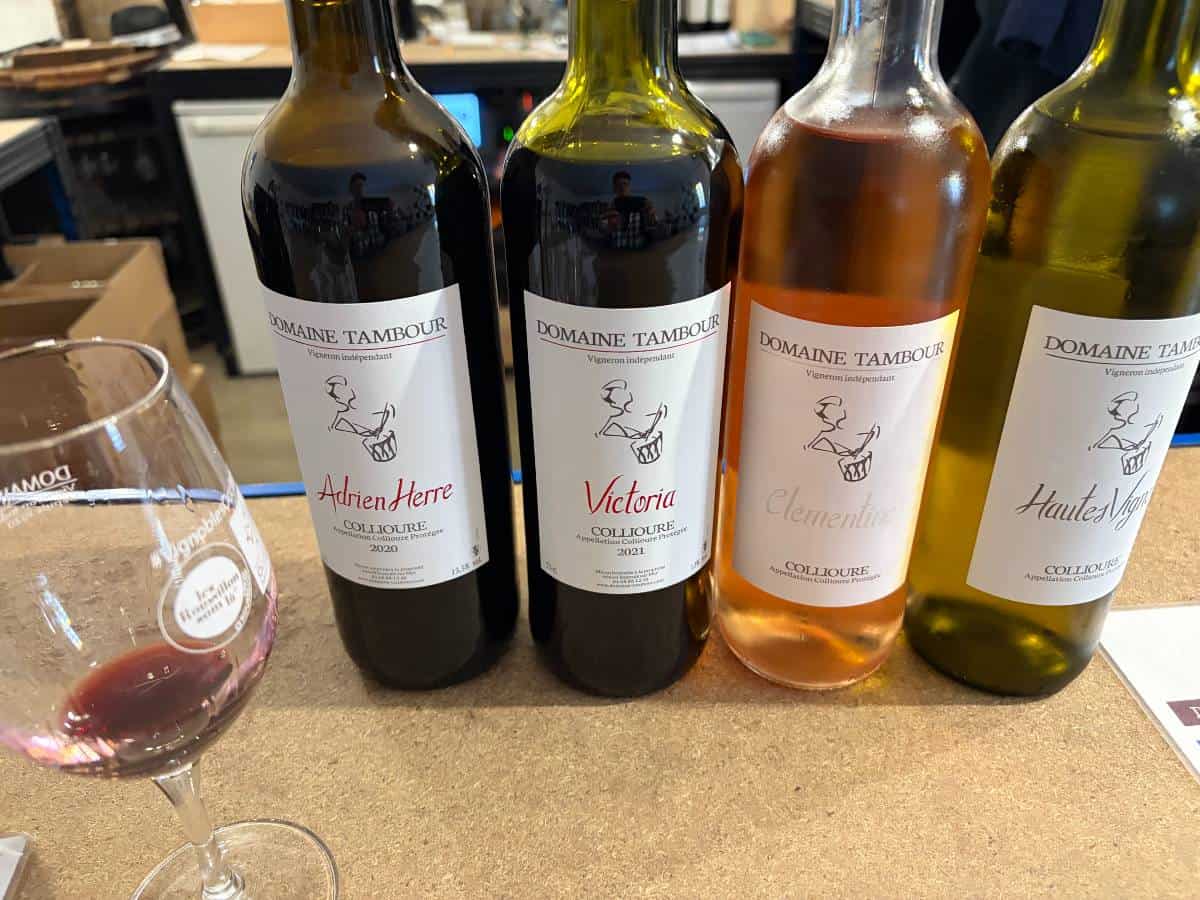
Their lineup was entirely Collioure still wines - no fortified Banyuls in sight. The Hautes Vignes white was mineral and fresh, and the reds - the Adrien Herre and Victoria cuvées - showed real Grenache character. One important note for wine hunters: Domaine Tambour doesn’t export, not even within the EU. These wines exist only here. That alone is a reason to visit.
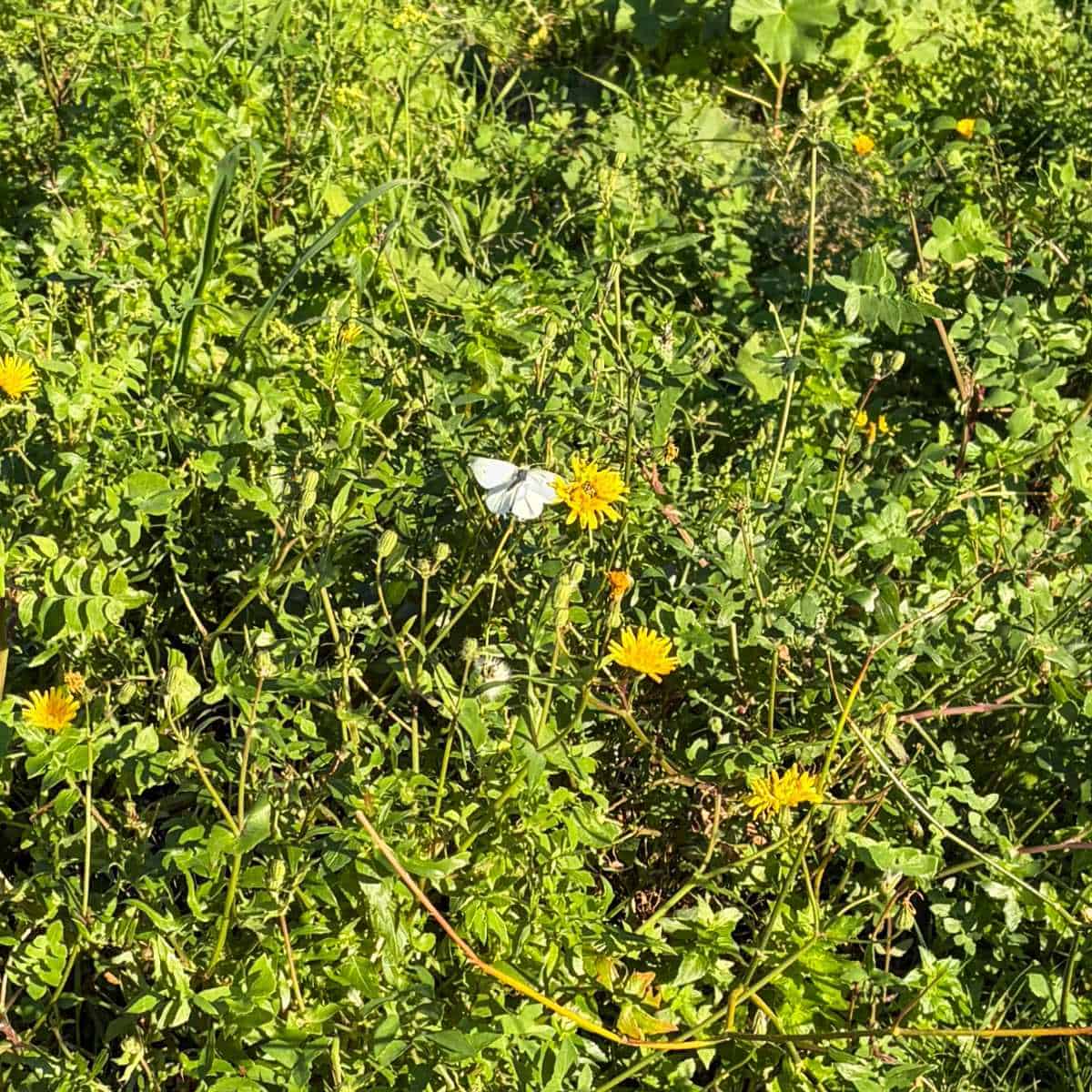
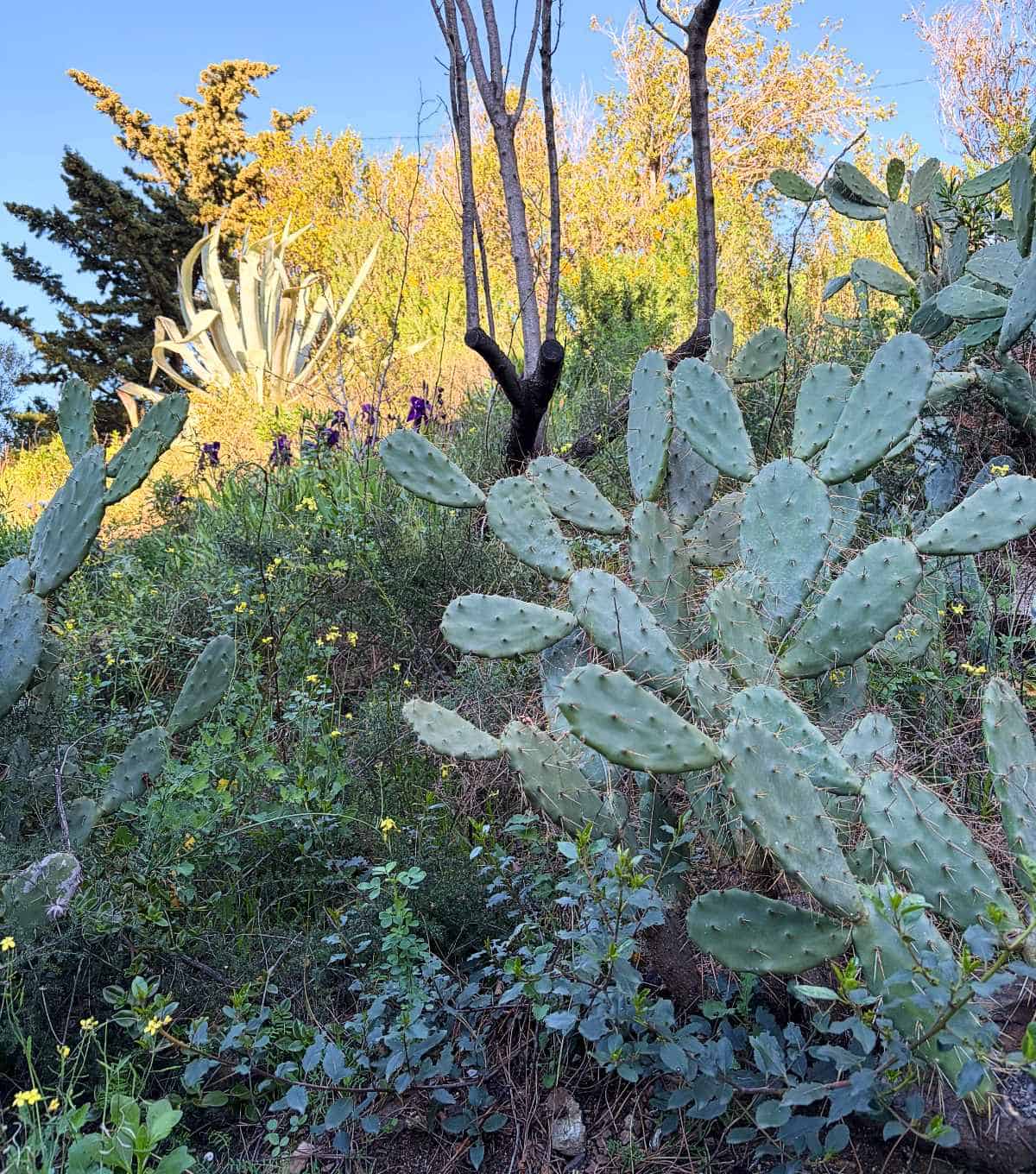
The walk back was one of those travel moments you can’t plan. Palm trees, lemon trees, wildflowers in bloom, a white butterfly resting on yellow dandelions, birds singing.
I stopped at a local grocery store on the way back - the kind of place where locals were picking up dinner after work, not a tourist spot - and grabbed a wedge of Tomme des Pyrénées for later.
A note on tasting room etiquette, for those who might be uncertain: every tasting I did in Banyuls was complimentary, and not once did I feel pressured to purchase. I offered appreciative comments, asked questions, practiced my French where I could. That seemed to be entirely sufficient. The producers were gracious and clearly proud of their wines.
Back at the Hotel: Snacks with a View
After several miles of hiking up and down and up again, I reached the hotel and was ready for some refreshment!
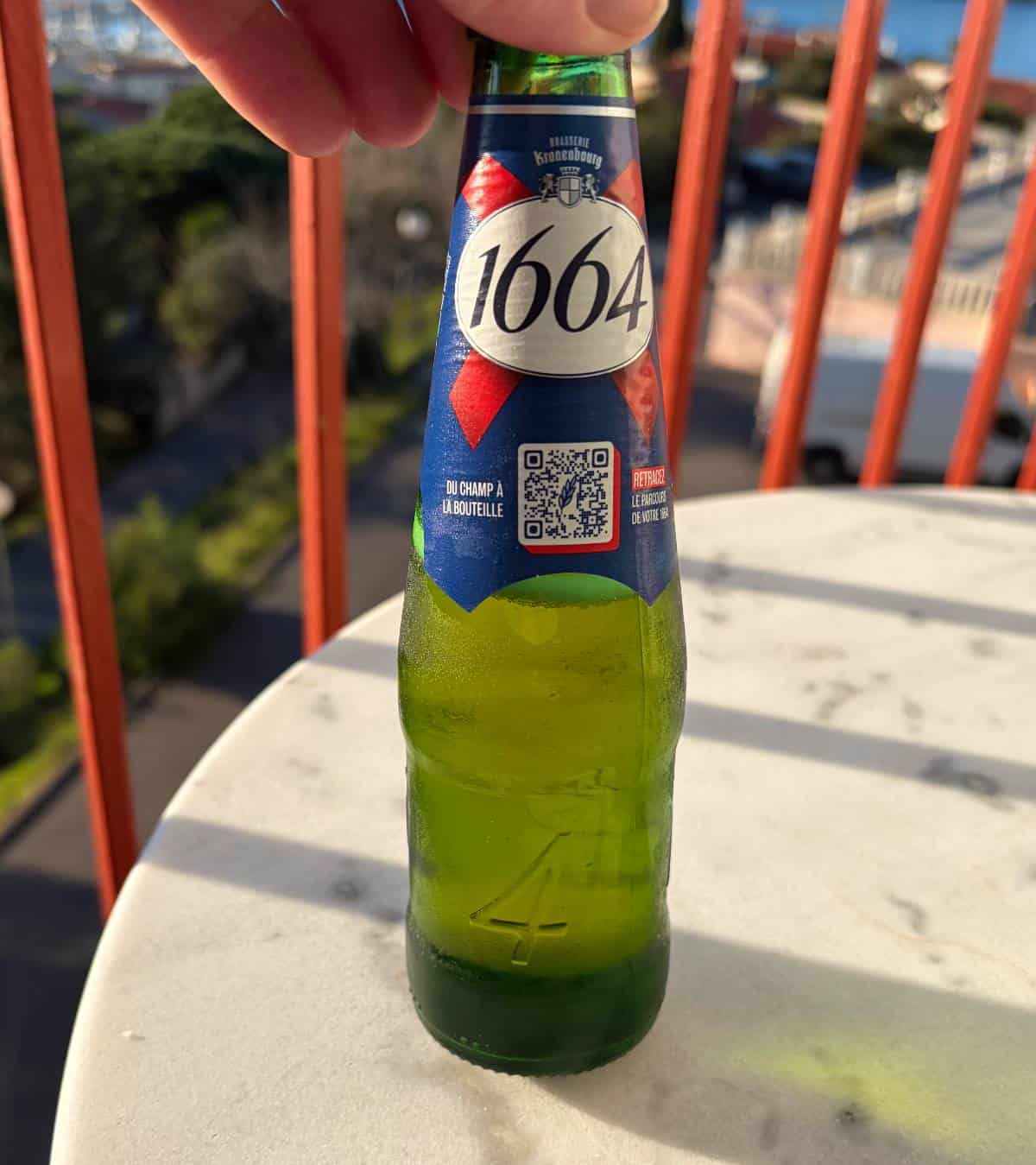
I initially had wine and cheese on my mind. That would come soon, but I was curious to try the little can of cold Kronenbourg 1664 lager. I cracked it open, and enjoyed it out on the balcony. That beer hit the spot!
Then I was ready for a little wine time. I had just enough left in the bottle of Les Tines 2023 Collioure rouge from dinner the night before to pair with the Tomme des Pyrénées and some crackers. I spread the snack out on a paper napkin on the balcony table. The harbor lay below. The mountains turned gold in the late afternoon light.
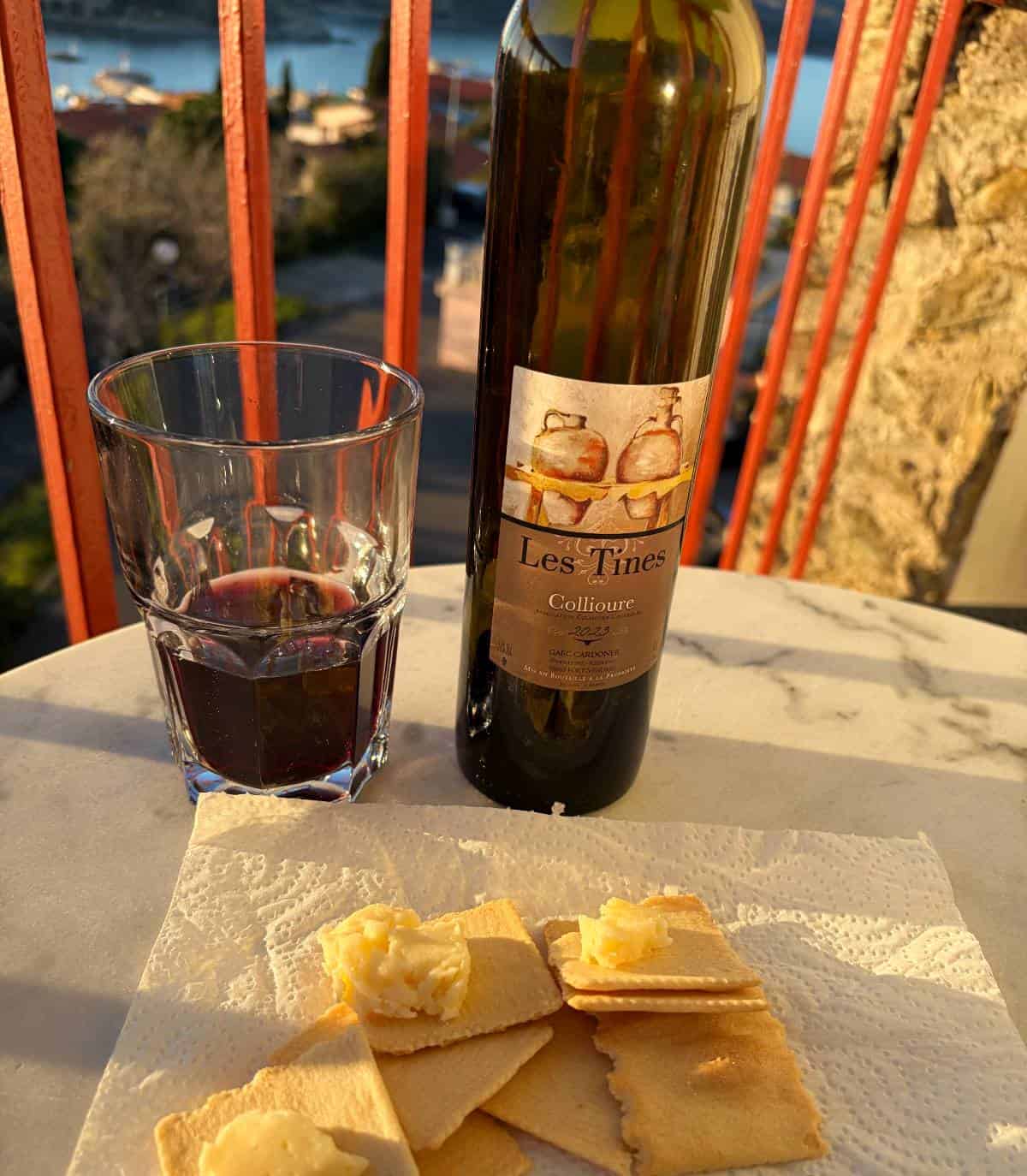
It wasn’t a complicated pairing. The local cheese was mild, the wine was pleasant and fruit-forward, the combination worked quite well. But the setting made it a wonderful pre-dinner moment.
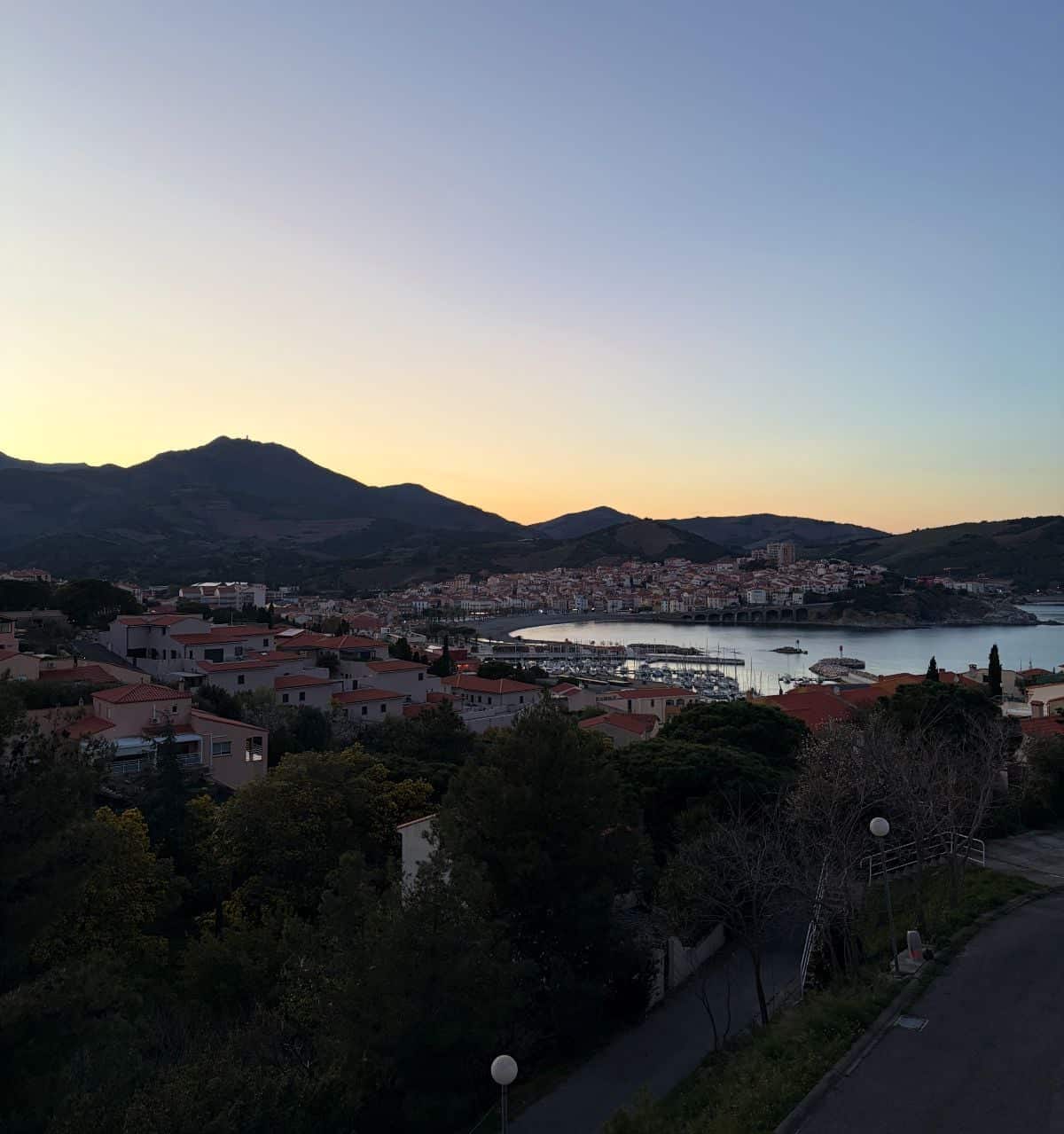
A word about the hotel: Hôtel Le Catalan was running at about €95 per night in late February. The room was simple and clean - nothing fancy. But the balcony had spectacular views, looking out over the mountains, the town, and the bay. At that price, in that location, it’s an exceptional value and I’d book it again without hesitation. The staff was generally quite friendly and helpful as well.
Eating and Drinking: A few notes
For dinner on our second night, Brendan and I walked to B66 Restaurant at the Côté Thalasso hotel, a short distance from Le Catalan. I walked over earlier in the day to check on their ability to accommodate his egg and nut food allergies. After an affirmative response, I made a reservation.
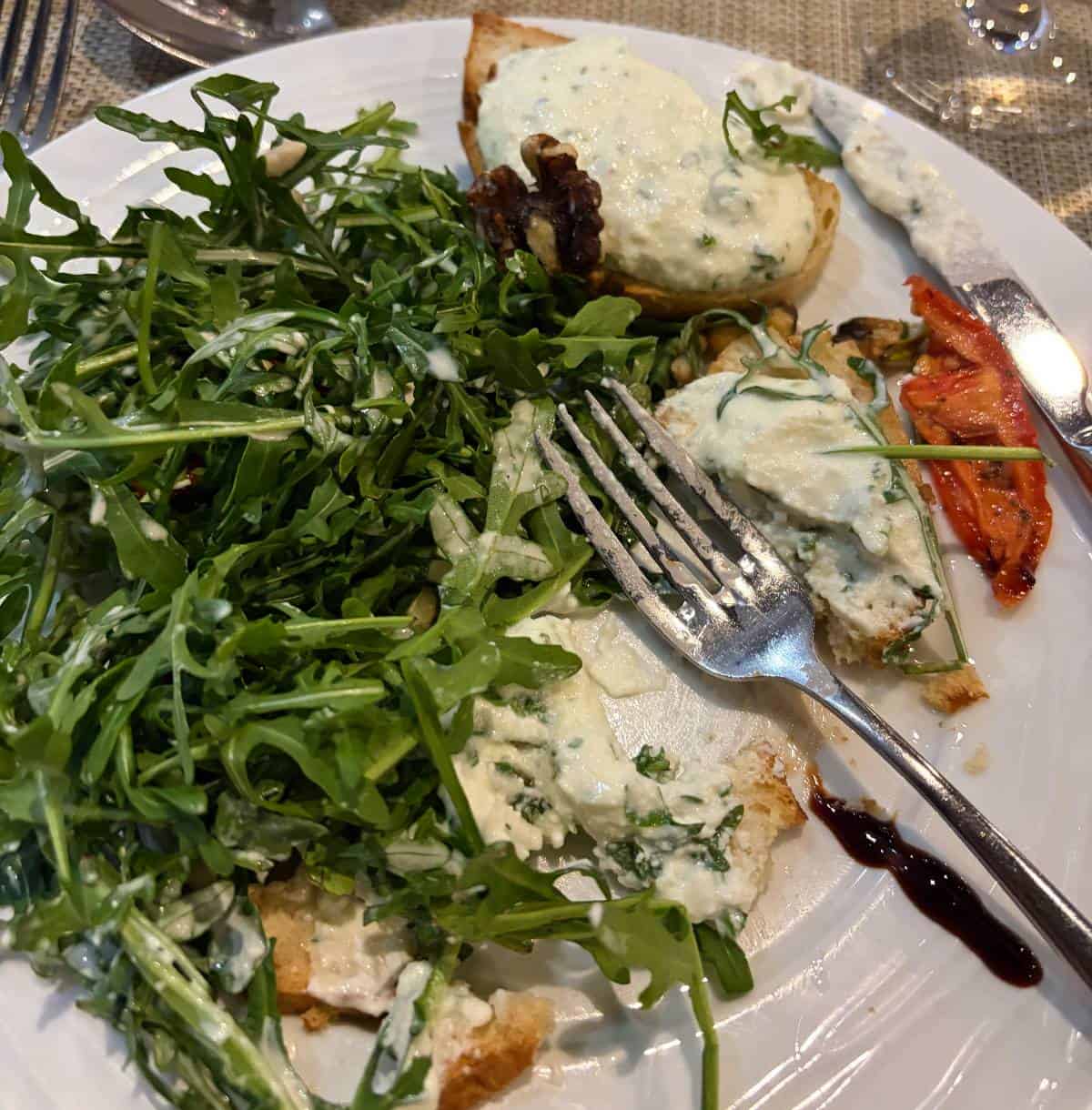
The restaurant had a relaxed, contemporary feel and good local wine on the list. I started with the arugula and pine nut salad with ricotta spread - fresh and bright, the kind of simple, well-executed dish that reminds you why arugula salads are worth making at home too. I followed the salad with rosemary and olive polenta. Brendan went for the dorade prepared Spanish-style with crunchy vegetables. He is typically not too adventurous in terms of ordering fish at restaurants, but he was pleased with his choice.
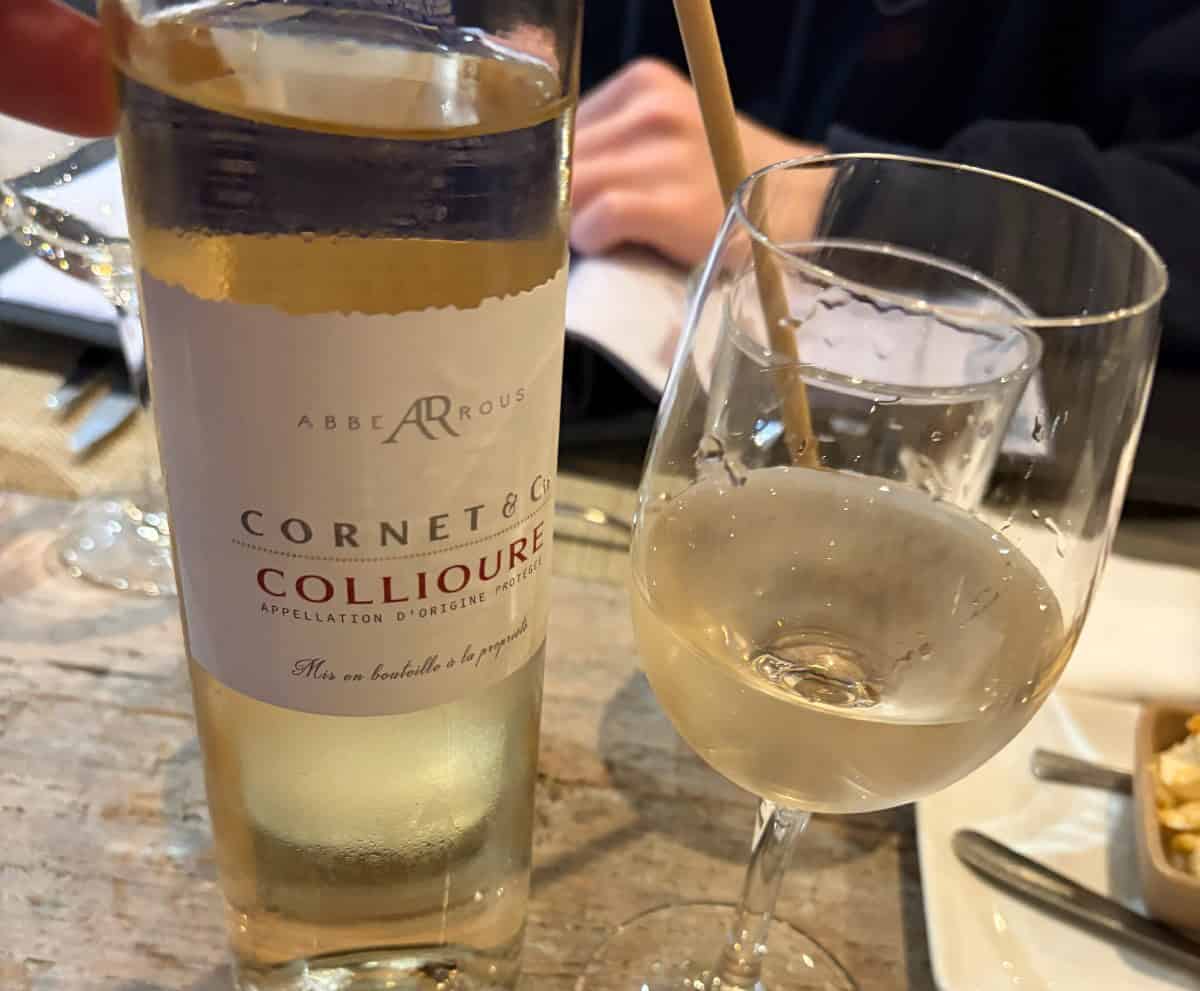
The Abbé Rous Cornet & Cie Collioure blanc appeared again on the wine list - a wine I’d enjoyed at lunch the day before. I correctly anticipated it would pair well with both dishes, and ordered it for my meal. Overall, we enjoyed our dining experience at B66.
One practical note: if you’re traveling with food allergy concerns, Banyuls requires a bit more patience and persistence than we found in Spain. From our limited sample size, it’s hard to say whether this was attributable to culture, the cuisine, or being in a small town versus a bigger city - most likely a combination of all three.
We encountered a few bumps at restaurants - a lunch spot in town that turned us away at the mention of allergies, and some extra formality navigating dinner reservations as hotel guests. Nothing insurmountable, and the meals we did have were genuinely good. We also found it more difficult to find allergy-safe bread at grocery stores - we’d been pleasantly surprised at how easily we found safe options in Barcelona.
A small discovery worth mentioning: many restaurants in the area offer wine in a smaller format - roughly two-thirds of a standard bottle - alongside the usual 750ml. For two people who want wine with a meal without committing to a full bottle, this is a great option. Or, in my case as the one wine drinker at the table, a choice that allowed for an extra glass back at the hotel!
One of the pleasures of eating and drinking in Banyuls is how naturally the local Collioure wines fit the table. Both the whites and reds showed up consistently on restaurant lists, paired well with everything from foie gras and grilled fish to roasted pork. If you’re a fan of Grenache-based wines, you’ll definitely enjoy the local wine options in Banyuls-sur-Mer.
Father and Son in France
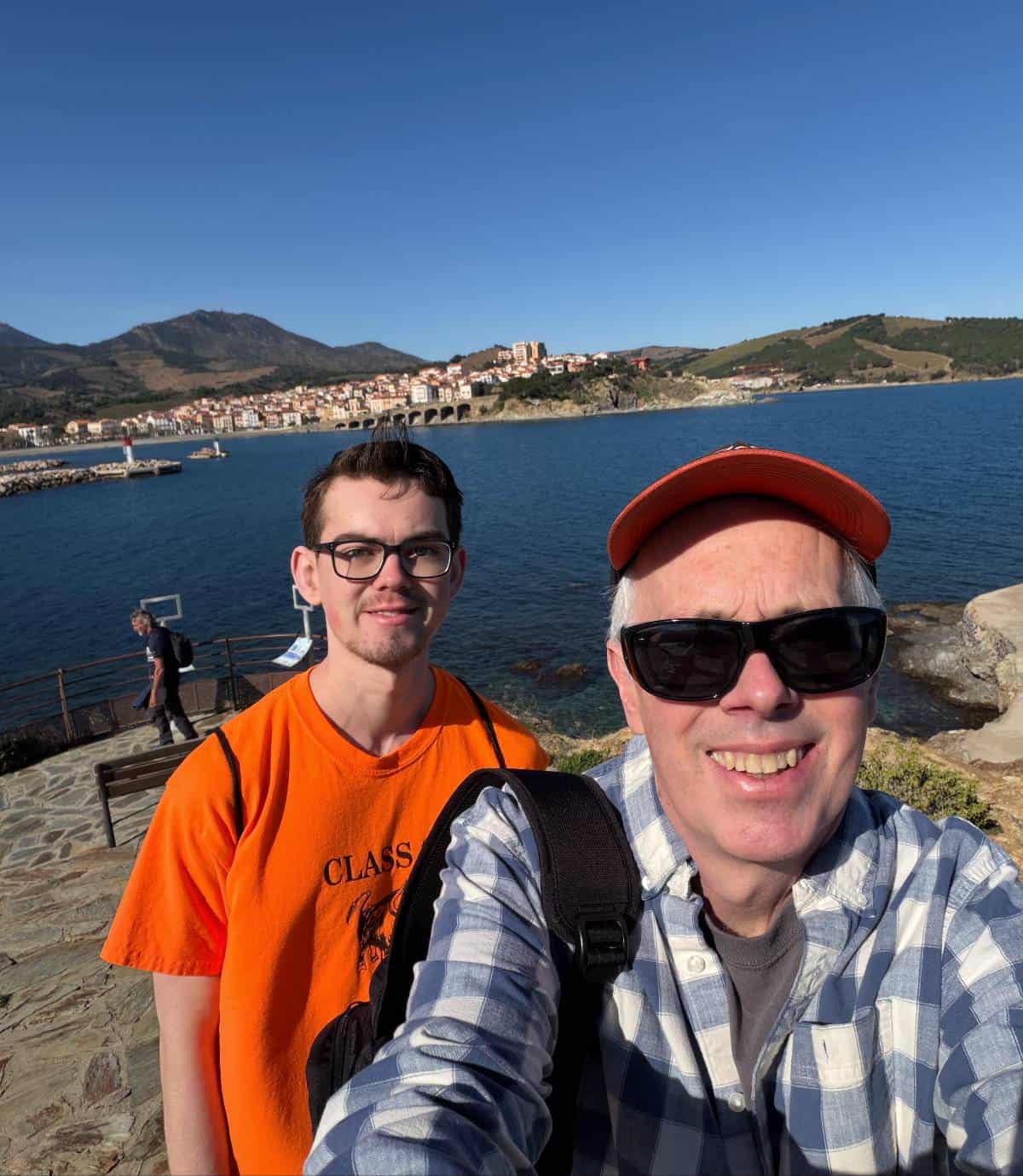
On our first full morning in Banyuls, Brendan and I explored the rocky outcrop at the edge of the harbor. The town was behind us, the vineyards terraced up the hillside beyond, the Mediterranean flat and blue in the winter sun.
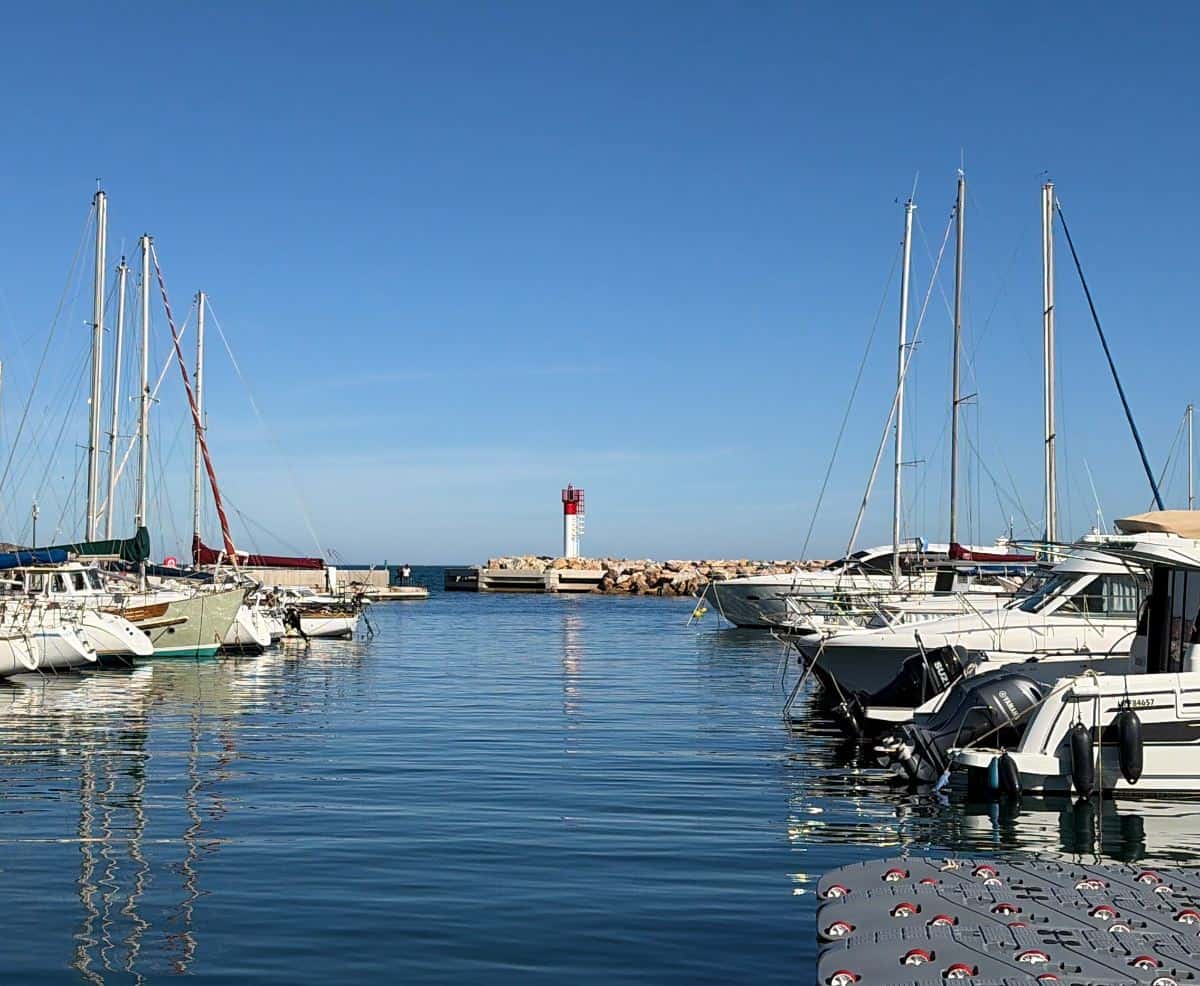
It was Brendan’s first time in France. He got there because he found Girona on a map, and I noticed how close that Spanish city is to the French border. I had some fun French wine experiences as a result, and Brendan got to put his seven years of French classes to use. It was fun exploring this French town together, both of us doing our best to dust off our French.
Brendan’s French was considerably more recent than mine, and it showed. He was able to help us navigate the basic communication we needed to get around town - including figuring out how to catch the local bus back to Perpignan! I chipped in with a bit more familiarity with French cuisine when it came time to interpret menus. Along with a little help from Google Translate!
Our trip to Spain had been about a year in the works. The side trip to France was a late addition - and one we were both very glad we made.
Tips for Visiting Banyuls-sur-Mer
Banyuls-sur-Mer is genuinely off the radar for most wine travelers, making it a great option to enjoy some excellent wine with great views, minus the crowds. Here are some tips based on my experience and research:
When to go: Late February and early March are excellent. The town is quiet, prices are lower, flowers are already blooming along the coast, and you’ll have tasting rooms largely to yourself. Summer will be crowded and hot. Do take note that some things may not be open yet or may have limited hours in the off-season - as my fruitless hike up the rugged hills to the Terres des Templiers cave will attest.
Getting there: The most natural approach is via train from Barcelona or Girona - the journey is scenic and relatively quick, the high Pyrenees rolling past the window as you cross the border before the hills soften toward the coast. Note that local rail disruptions do happen (as we discovered); have a backup plan. If the train isn’t running, the local bus is worth figuring out as a budget-friendly alternative. Renting a car is another option if you want more flexibility.
Where to stay: Hôtel Le Catalan offers remarkable value in the off-season, particularly if you can get a room with a balcony view. Simple, clean, well-located, and those sunsets from the terrace are genuinely unforgettable. Note that like many coastal properties in the region, the hotel operates seasonally - check their website for current opening dates before planning your visit.
What to taste: Don’t overlook the Collioure still wines in favor of the famous fortified Banyuls. The whites are mineral-driven and food-friendly; the reds show real character and range. My favorites: Clos Saint Sébastien for the most polished small-producer lineup; Domaine Tambour for artisan Collioure that you simply cannot find anywhere else in the world; and the Abbé Rous Cornet & Cie Collioure blanc, which appeared on restaurant lists and proved versatile with everything. 9 Caves is on my list for a return visit - recommended by fellow wine writer Jeff Burrows of foodwineclick - but note their hours are limited in winter.
Tasting room protocol: Don’t be intimidated. Tastings are free, there’s no pressure to buy, and a warm attitude and a few words of French go a long way. These are small producers who love their wines and are happy to share them.
How long to stay: I’d suggest at least two nights in Banyuls, and three would let you breathe a bit more. Several people also recommended the nearby town of Collioure as another beautiful stop on the Côte Vermeille - with just two nights and one full day, we decided to skip it this time. I certainly enjoyed the wine carrying that name though!
Plan ahead: The Banyuls-sur-Mer Office de Tourisme was a helpful resource in planning the trip - worth checking their site before you visit for current opening hours, events, and local recommendations. Their staff was also quite responsive to my email inquiries ahead of the trip. Merci!
Curious about the Barcelona and Girona side of this trip? Check out my post on Barcelona and Girona wine and family travel. And for more on the wines of the broader Catalan region, stay tuned - that article is coming soon.
Leave a Reply